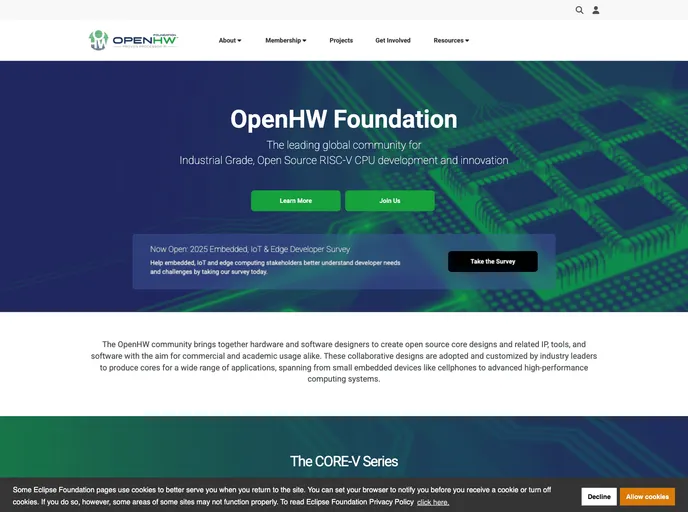
OpenHW Group is a global, not-for-profit organization where hardware and software designers collaborate on open-source cores, IP, tools, and software. It provides infrastructure to host high-quality open-source hardware projects aligned with industry best practices.
Overview
OpenHW Group is an innovative organization that brings together hardware and software designers to collaborate on open-source projects, specifically focusing on developing open-source cores, IP, tools, and software. As a not-for-profit entity, OpenHW aims to provide a robust framework for hosting high-quality hardware developments, adhering to industry best practices. Their commitment is rooted in fostering a global community of contributors who share knowledge and resources to push the envelope in hardware design.
The website, openhwgroup.org, showcases the group’s initiatives and serves as a platform for collaboration. It uses Hugo, a popular static site generator, to ensure a seamless digital experience for its users. This combination of community support and technological efficiency makes OpenHW Group an essential player in the open-source hardware landscape.
Features
- Collaboration Focus: The platform enables hardware and software designers to work together on open-source projects, enhancing innovation through shared knowledge.
- Infrastructure for Development: OpenHW provides essential tools and resources that comply with industry standards, making it easier for contributors to develop and maintain their projects.
- User-Friendly Install Process: The website offers clear instructions for setting up the required software, including node.js and Git, ensuring a smooth onboarding process for new contributors.
- Active Community Support: Users can contribute by forking the repository, submitting features, or reporting bugs, fostering an open and inclusive atmosphere.
- Transparency in Licensing: All projects are released under the Eclipse Public License v. 2.0, ensuring that users can utilize the code freely while adhering to clear legal guidelines.
- Theme Consistency: The use of the Eclipse Foundation’s theme creates a cohesive visual experience, strengthening the identity of the platform.
- Issue Tracking: An established system for reporting bugs and feature requests ensures that user feedback is valued and acted upon continuously.